Japan and South Korea are two of the most powerful and modern nations in East Asia. Both countries have strong economies, advanced technology, and a huge cultural impact on the world stage.
But their relationship is complicated.
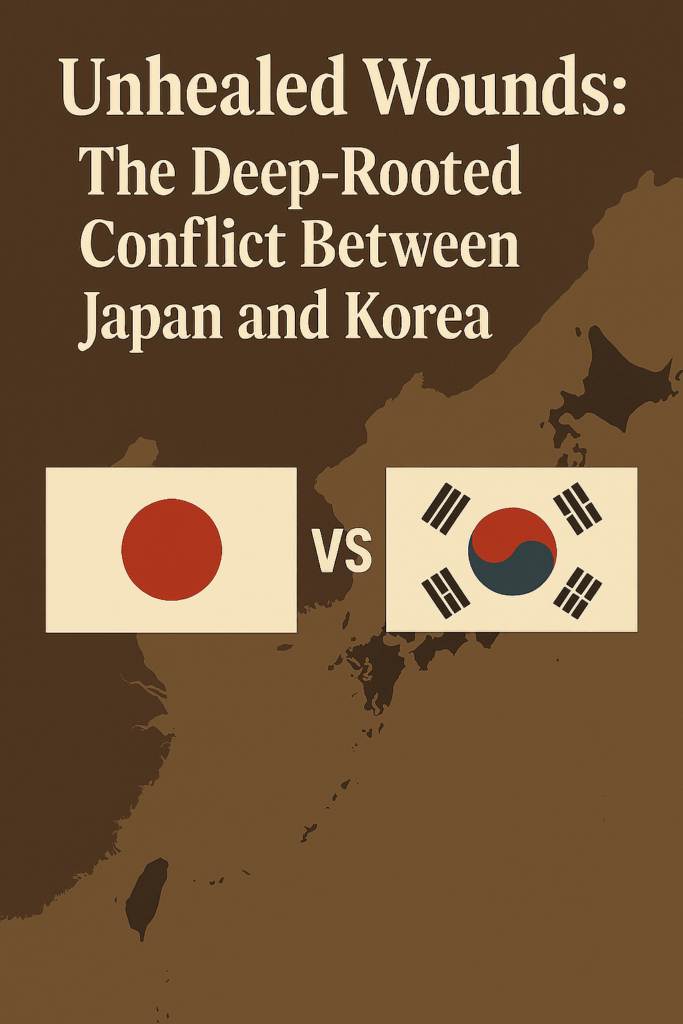
Rooted in a painful history of colonization and political tension, the rivalry between Japan and Korea has evolved. Today, it’s not just about the past — it’s about the future. From K-pop vs anime to beauty trends, tech innovation, and media influence, both countries are competing for global attention.
This blog explores how Japan and Korea went from historical conflict to cultural competition. We’ll look at their political ties, economic rivalry, and how they each shape modern culture in unique and powerful ways.
Historical Background of Japan and Korea
Early Interactions and Shared Roots Between Japan and Korea
Japan and Korea share centuries of early contact through trade, migration, and diplomacy.
One of the most significant cultural bridges was the introduction of Buddhism and Confucianism from Korea to Japan. These philosophies shaped both societies—Buddhism influencing art and spirituality, while Confucian values defined social hierarchy, education, and government structure.
Though different in language and identity, the two countries developed side by side, often learning from and inspiring one another.
Colonial Period and Post-War Fallout
The relationship changed drastically when Japan annexed Korea from 1910 to 1945. This 35-year period of colonization was marked by repression of Korean identity, language, and culture, leaving deep scars that still affect relations today.
After Japan’s defeat in World War II, Korea regained independence—but soon split into North and South, leading to the Korean War in the early 1950s. South Korea began its rise from poverty under authoritarian rule, eventually transforming into a modern democracy and economic powerhouse. Meanwhile, Japan—under U.S. occupation—focused on rapid reconstruction and industrial growth, becoming a global leader in technology and manufacturing by the 1980s.
While both nations achieved remarkable post-war recoveries, their parallel successes did not bring them closer. Instead, the different paths they took—politically, socially, and economically—further shaped the distinct national identities and mutual distrust that continue to influence their relationship today.
Japan and Korea’s Modern Political Relationship
Lingering Tensions and Historical Disputes
Several unresolved historical issues continue to strain Japan–Korea relations. The comfort women controversy, involving Korean women forced into wartime military brothels, remains a major source of emotional and political tension. Although the Japanese government has paid significant compensation—most notably in a 2015 agreement that included a formal apology and a multimillion-dollar fund—many in Korea believe the efforts were insufficient or lacked sincerity.
Textbook disputes also persist, with Korean critics arguing that Japanese textbooks often downplay or omit key parts of the colonial era.
Finally, both countries claim the Dokdo/Takeshima islands, a territorial dispute that regularly sparks diplomatic protests and nationalistic sentiment.
These lingering issues keep historical wounds open and continue to affect public perception and diplomatic trust on both sides.
Cooperation Under Pressure
Despite ongoing tensions, Japan and South Korea maintain important areas of cooperation—especially under the pressure of regional threats.
Both countries are part of a trilateral alliance with the United States, primarily aimed at maintaining stability in East Asia. While they may disagree politically, security concerns—particularly regarding North Korea’s missile program—often push them to work together through intelligence sharing, joint military exercises, and diplomatic coordination.
There have also been multiple attempts at diplomatic summits and reconciliation, including recent trilateral meetings hosted by the U.S. These efforts aim to strengthen unity on shared challenges, though the outcomes are often fragile and short-lived.
Cooperation between Japan and Korea is rarely smooth, but it remains necessary in today’s unpredictable geopolitical climate.
Economic and Technological Rivalry Between Japan and Korea

Competing Giants in Tech and Industry
The economic rivalry between South Korea and Japan is especially sharp in tech and manufacturing. Samsung and Sony, once fierce competitors in consumer electronics, represent this dynamic. While Sony dominated early on, Samsung’s innovation and global reach have since given it the edge, particularly in smartphones and displays.
In autos, Hyundai challenges Toyota’s global leadership. Toyota is known for hybrid efficiency and reliability, while Hyundai is gaining ground with bold EV strategies and tech-driven design. Their competition fuels innovation but also deepens national pride and economic rivalry.
Semiconductor Disputes and Trade Friction
Tensions escalated in 2019 when Japan restricted exports of key semiconductor materials to South Korea, affecting firms like Samsung and SK Hynix. Seen as retaliation linked to historical issues, the move pushed South Korea to diversify its supply chains and reduce reliance on Japanese materials.
These disputes highlight how economic competition is entangled with political history. As both nations strive for technological dominance, their mutual dependence makes the rivalry complex and ongoing.
K-pop vs Anime — The Cultural Showdown Between Japan and Korea
The Rise of K-pop
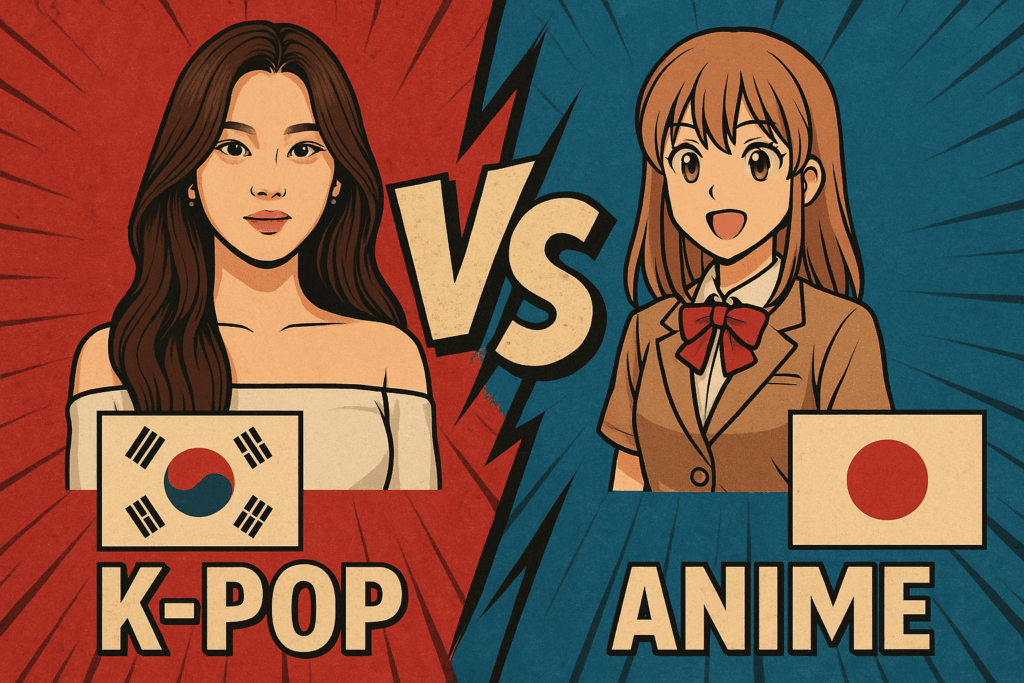
K-pop has become a global cultural force, driven by a meticulously managed idol system, intense training, and a focus on visual performance. Korean agencies invest heavily in global marketing, using social media, YouTube, and international tours to build massive fanbases. K-pop fandoms are highly organized and interactive, fueling trends, streaming campaigns, and even charitable efforts—all contributing to the genre’s worldwide success.
H3: The Enduring Power of Anime
Anime remains a cornerstone of Japanese cultural influence, known for its narrative depth, emotional complexity, and rich visual styles. Unlike many trends, anime appeals to all ages, with stories ranging from whimsical to philosophical. It carries deep cultural symbolism and often explores universal themes, allowing it to maintain global relevance and a loyal, cross-generational fanbase.
Cross-Cultural Influence and Global Reach
Despite their rivalry, Korea and Japan have significantly influenced each other’s pop cultures. Korean idols often debut or promote in Japan, tapping into a large, loyal fanbase. Japanese fans appreciate K-pop’s polished performances and vibrant fan culture, while agencies localize content to suit Japanese tastes.
Conversely, anime enjoys strong popularity in South Korea, especially among younger audiences. Streaming platforms and fan communities have made Japanese animation widely accessible, and Korean studios sometimes collaborate on anime production.
Globally, K-pop and anime have become cultural exports that shape international perceptions of both countries. What the world consumes—whether a BTS music video or a Studio Ghibli film—reflects not just entertainment preferences, but also soft power, identity, and the evolving cultural rivalry between two creative giants.
Soft Power, Beauty, and Lifestyle Trends
K-beauty vs J-beauty
K-beauty is known for its cutting-edge skincare innovations—multi-step routines, high-tech ingredients, and a focus on glowing, youthful skin. It’s trend-driven, fast-moving, and fueled by social media and idol endorsements.
In contrast, J-beauty embraces minimalist elegance, emphasizing simplicity, long-term results, and traditional ingredients. Its steady, timeless approach appeals to those seeking quality over hype. Together, they shape global beauty trends from different philosophies.
Fashion, Food, and Daily Culture
Japanese and Korean lifestyle aesthetics also compete in fashion, food, and everyday culture. Harajuku represents Japan’s eclectic, playful street style, while Gangnam reflects Korea’s polished, trend-conscious image.
In cuisine, ramen offers comfort and depth rooted in tradition, while Korean BBQ brings a vibrant, interactive dining experience. Both have passionate global followings.
Streetwear, matcha, bubble tea, and other lifestyle exports show how both cultures influence global tastes. As soft power tools, these trends go beyond consumption—they express identity, aspiration, and cultural reach.
Youth Perspectives in Japan and Korea
Cultural Curiosity Over Nationalism
Among younger generations in both Japan and Korea, cultural curiosity often outweighs historical tensions. Korean youth watch anime and read manga, while Japanese teens follow K-pop groups and Korean dramas. This mutual consumption reflects a shift from rigid nationalism to open cultural appreciation.
Language learning and study abroad programs are increasingly popular, with many students motivated by media and fandom. Online communities, fan translations, and social media interactions further bridge cultural gaps, creating shared spaces where identity is shaped more by interests than by borders.
The Internet Generation’s Role in Bridging Gaps
Digital platforms like TikTok, YouTube, and Reddit have become powerful tools for cultural exchange between Japanese and Korean youth. Through fan edits, reaction videos, and cross-cultural content, Gen Z users actively share and remix each other’s cultures in real time.
Rather than inherit past hostilities, many young people approach these interactions with curiosity and nuance. Online communities foster dialogue, challenge stereotypes, and normalize cultural blending—making Gen Z a key force in softening national divisions through everyday digital engagement.
Conclusion
The rivalry between Japan and Korea is complex—rooted in history, yet evolving through culture, technology, and youth engagement. While tensions remain, competition has often driven both nations to innovate, excel, and redefine global standards in everything from pop culture to industry.
Beneath the surface, there’s also mutual admiration: Korean fans of anime, Japanese fans of K-pop, and youth on both sides who are more curious than confrontational. This modern rivalry functions less as a barrier and more as a cultural motivator—pushing each nation to grow, adapt, and share their strengths with the world.
In the end, it’s not just about who leads, but how they inspire each other to be better.
Check out for my blog: https://japmafiayakuza.com/
If you want to know more about Japan and Korea:
https://en.wikipedia.org/wiki/Japan%E2%80%93Korea_disputes